
Now Reading: Visiting the UAE From Elsewhere in the Gulf: What GCC Travelers Need to Know in 2026
- 01
Visiting the UAE From Elsewhere in the Gulf: What GCC Travelers Need to Know in 2026

Visiting the UAE From Elsewhere in the Gulf: What GCC Travelers Need to Know in 2026

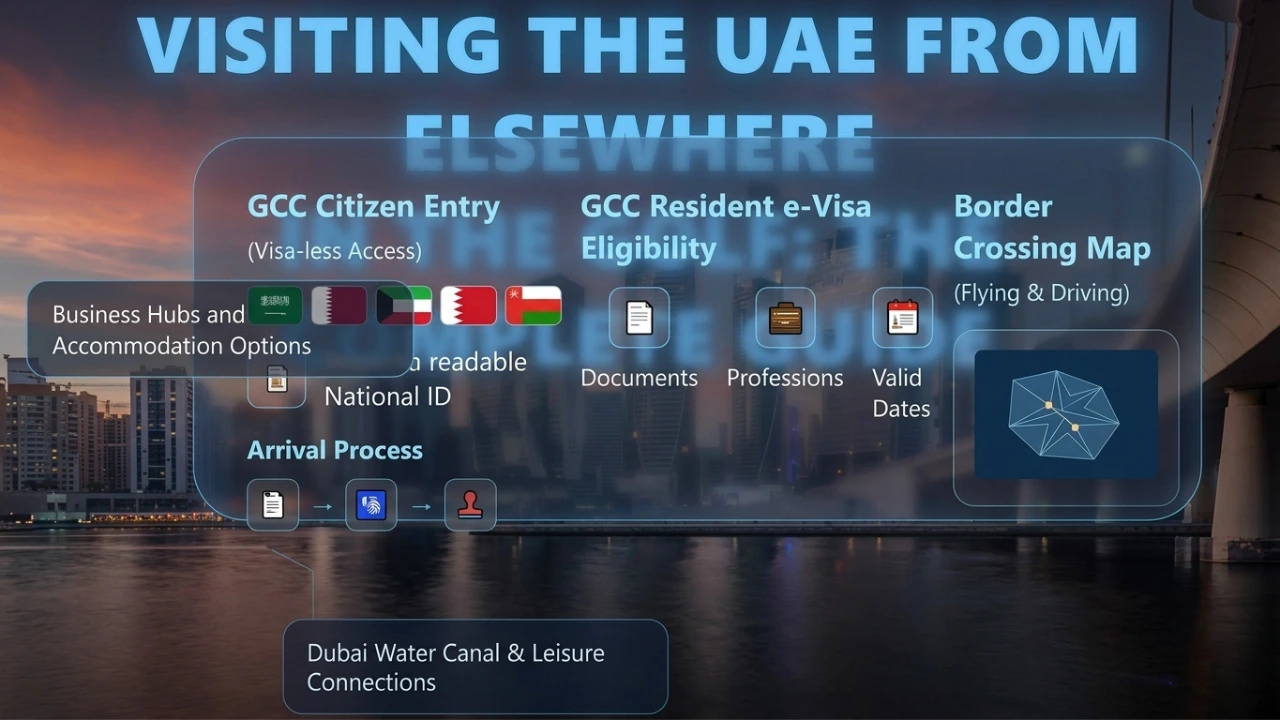
Hopping over to the UAE from Saudi Arabia, Oman, Qatar, Kuwait or Bahrain sounds simple on paper. And for a lot of people it genuinely is. But the rules shift depending on one thing most travelers don’t think about until it’s too late – whether you’re a citizen of a GCC country or just living in one. That single detail decides whether you walk through the border in minutes or need to sort out paperwork first.
Are You a GCC Citizen or a GCC Resident? Why It Matters
These two terms get mixed up constantly, so let’s clear it up early. A GCC citizen holds a passport from Saudi Arabia, the UAE, Qatar, Kuwait, Oman or Bahrain. A GCC resident is someone else entirely – an expat living legally in one of those countries but holding a passport from somewhere outside the Gulf, say India, Pakistan, the Philippines or Egypt. Living in a Gulf country doesn’t hand you the same entry perks as actually being a citizen of it. This one distinction affects everything that follows, so get it straight before booking anything.
Entry Rules for GCC Citizens
If you’re a citizen of Bahrain, Kuwait, Oman, Qatar or Saudi Arabia, this part’s refreshingly easy. You can enter the UAE without a visa at all, just your national ID or passport at the border. No forms, no advance approval, no standing around wondering if you filled something out wrong. It’s one of the genuine perks of Gulf citizenship, honestly, and it makes short notice trips to Dubai or Abu Dhabi feel almost casual.
Entry Rules for GCC Residents (Expats)
Here’s where things tightened up, and not that long ago either. As of July 2024, GCC residents can’t get a visa on arrival anymore, something that used to be an option not too long ago. Now an e-Visa needs sorting before you even leave home.
- Your passport needs at least six months of validity left from your entry date
- Your GCC residence permit needs solid time remaining too, though exact requirements shift a bit depending on where you’re applying from, so double check current rules before you commit to anything
- You’ll need proof of sufficient funds for your stay
- A return ticket is generally part of the application
- Travel insurance and a clean criminal record round out the basics
Not every profession qualifies either, which catches people off guard. White collar categories like doctors, engineers and accountants tend to get approved more easily, while some blue collar jobs still face restrictions. Worth checking your specific situation against the current list rather than assuming you’re automatically covered.
How Long Can You Actually Stay?
For GCC residents, the e-Visa typically grants a 30 day single entry stay, extendable once for another 30 days if you need more time. That’s close to two months for most people who plan it right. GCC citizens aren’t tied to a fixed visa duration in the same way at all, since they’re not really operating under a visa to begin with.
Getting There: Air or Land?
Both work fine. Honestly it just comes down to distance and how much you enjoy road trips.
- Flying’s quick and painless from somewhere like Kuwait or Bahrain, with short hop flights connecting most Gulf capitals to Dubai or Abu Dhabi in a couple hours
- Driving from Saudi Arabia usually means crossing at Al Ghuwaifat, a well used route between the two countries
- Coming from Oman, the Hatta border or Al Ain crossing are the go-to choices, both fairly painless for private vehicles
- Bus services run between some Gulf capitals and the UAE too, a decent budget option if you don’t mind a longer ride

What to Prepare Before You Travel
A little prep saves a lot of stress at the border.
- Check your passport’s expiry date well ahead of time. Six months validity isn’t negotiable
- Confirm whether you actually need the e-Visa, based on citizenship versus residency status
- Save or print your e-Visa approval if it applies to you, just in case you need to show it physically
- Keep your return ticket details ready, even if it feels like a formality nobody checks
- Sort out travel insurance beforehand instead of scrambling last minute
- Keep a copy of your GCC residence permit on you, digitally and on paper both
What Feels Familiar, and What Doesn’t
Coming from another Gulf country, plenty of things feel instantly familiar. The heat, for one – that never really changes country to country. The general rhythm of daily life, prayer times, that shared sense of Gulf hospitality, all of it carries over pretty smoothly. Arabic works everywhere, and if you’re used to Gulf driving habits, UAE roads won’t throw you off much either.
What does shift a bit is the pace and scale of the cities themselves. Dubai in particular runs faster and denser than most Gulf capitals, with a mix of nationalities that can feel more international than what you’re used to back home. Currency changes too – the Dirham isn’t pegged one to one with every Gulf currency, so a quick mental conversion habit helps when you’re shopping or grabbing dinner somewhere.
Tips for a Smooth Crossing
A few small habits make land crossings and airport arrivals go faster.
- Travel weekday mornings if you’re crossing by land. Weekend traffic at popular borders gets heavy fast
- Keep your documents in one folder rather than scattered across bags, phone screenshots and random printouts
- Double check your visa category actually matches your passport and residence combination before you leave home
- Don’t assume your GCC citizen status covers a companion who isn’t also a citizen. Dependents often need their own paperwork
- Give yourself buffer time at land borders, especially during holidays, when queues stretch way longer than usual
Frequently Asked Questions
Do GCC citizens need any visa at all to enter the UAE?
No. Citizens of Bahrain, Kuwait, Oman, Qatar and Saudi Arabia can enter with just their passport or national ID, nothing else required.
Can GCC residents still get a visa on arrival?
No, not since July 2024. GCC residents now need an approved e-Visa before traveling, full stop.
How long can a GCC resident stay in the UAE on this visa?
The e-Visa allows 30 days, extendable once for another 30, so close to two months if needed.
Is it better to fly or drive from a neighboring Gulf country?
Depends on distance, really. Flying suits farther spots like Kuwait or Bahrain, while driving works well from Saudi Arabia or Oman thanks to established land crossings.