
Now Reading: Burj Al Arab: Everything You Should Know Before Visiting Dubai’s Sail Shaped Icon
-
01
Burj Al Arab: Everything You Should Know Before Visiting Dubai’s Sail Shaped Icon

Burj Al Arab: Everything You Should Know Before Visiting Dubai’s Sail Shaped Icon

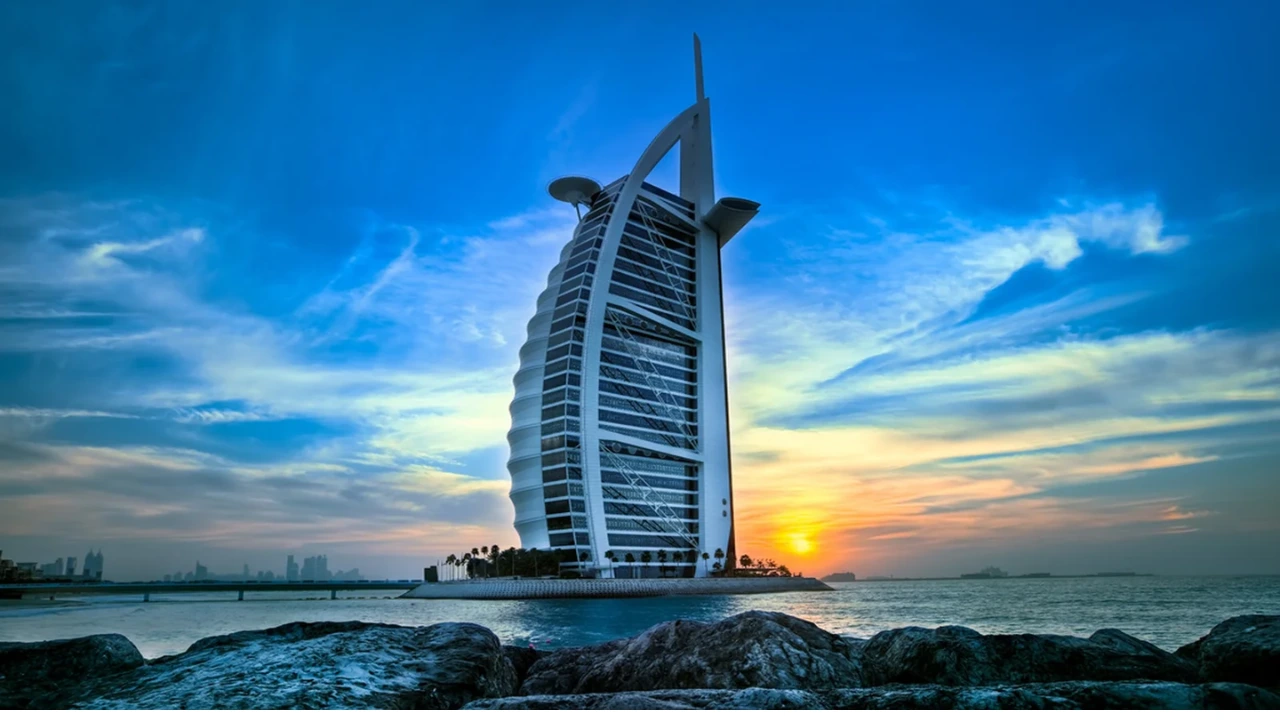
Dubai’s skyline is packed. Tall towers everywhere along Sheikh Zayed Road, most of them blending into each other after the third or fourth one. But one building still stands apart, literally, sitting on its own island off Jumeirah Beach. That’s the Burj Al Arab. Sail shaped, marketed for years as the world’s only seven star hotel, even though no such rating ever officially existed. Call it whatever you want honestly, it’s still one of the most photographed buildings on earth. Here’s what’s actually behind the photo everyone’s seen a hundred times.
What Is the Burj Al Arab?
A luxury hotel, run by Jumeirah Group, sitting on a man made island, hooked to the mainland by a private curved bridge. No public road runs anywhere near it. That alone tells you how exclusive this place wants to feel. Around 321 meters tall, one of the tallest hotel buildings anywhere, and every room’s a suite. Not one standard room in the entire building, not one. 202 suites total, spread through that sail shaped frame.
A Short History of the Building
Construction kicked off mid 90s, wrapped up by 1999, opened to guests that December. Architect Tom Wright, working with Atkins, built it specifically to become a symbol for Dubai. Something like the Eiffel Tower is for Paris, or the Opera House for Sydney. Judging by how often it shows up in photos of the city now, yeah, that worked. Worked really well actually.
The island got built from scratch just for this. Getting the foundation right took real engineering, since the ground underneath is basically sand, not the most confidence inspiring base to build on. Close to a decade of work went into something that, from far away, looks almost too simple to have taken that long.
Why Does It Look Like a Sail?
Not random, not even a little. Wright based the shape on the sail of a dhow, the traditional wooden boats that sailed the Gulf for centuries and still carry weight in the region’s maritime history. Stand at the front, look up. The curve really does look like a sail caught mid gust, it’s not just a marketing description.
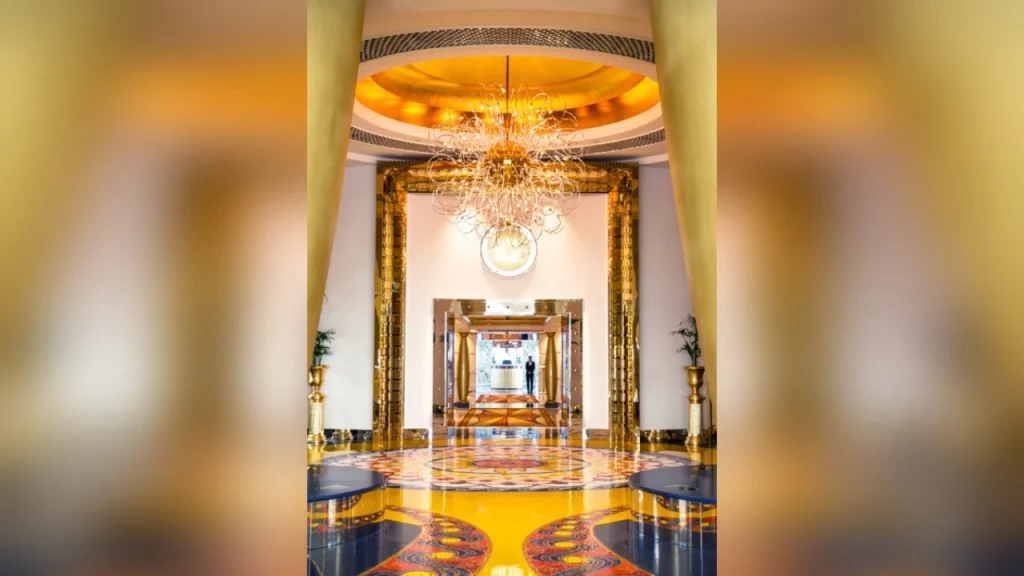
That sail shape is also why there’s a massive open atrium inside, one of the tallest hotel atriums anywhere, running up through most of the building’s height. Gold leaf covers a good chunk of the interior. Stunning or a bit much, depends who you ask. Depends on my mood that day too, if I’m being honest.
What’s Inside the Burj Al Arab?
Beyond the suites, a few things actually pull people out here.
- The atrium lobby, soaring up through the center, gold everywhere, fountains too
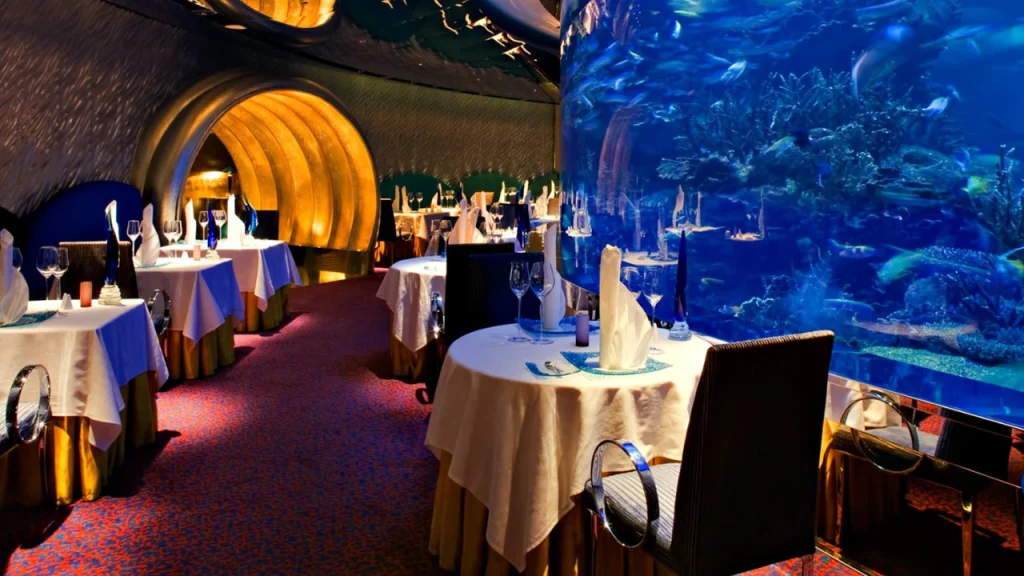
- Al Mahara, an underwater themed restaurant, diners sitting right next to a massive aquarium
- Skyview Bar, up high, wide coastline views, a favorite for evening drinks
- Al Muntaha, a restaurant hanging out near the top on a cantilevered platform
- A helipad on the roof, mostly used for stunts now rather than actual transport
Every suite comes with its own butler. That, plus basically everything else here, is how they justify the price tag.
Can You Visit Without Staying There?
Yeah, and honestly most people go this route instead of booking a suite. Walking in off the street though, that’s not happening. Security checks the bridge, turns away anyone without a reservation, no exceptions, don’t even try talking your way in.
- Book afternoon tea, usually gets you lounge access plus some interior views
- Reserve a restaurant table, gets you inside without paying for a room
- Some tour operators run guided visits with a short walkthrough of the public spaces
- Staying overnight works too, though suite prices run way past most hotels in the city
Booking something ahead, even just a coffee slot, is really the only way in if you’re not a paying guest.
Famous Moments That Happened at the Burj Al Arab
A few stunts turned this building into a pop culture reference point on top of everything else.
- Tiger Woods hit a golf shot off the helipad in an early promo stunt, ball flying straight out over the water
- Roger Federer and Andre Agassi played an exhibition match on a court set up right on the helipad
- The hotel’s hosted plenty of high profile guests and events tied to Dubai’s tourism push over the years
These stunts probably did more for the building’s fame than any ad campaign ever could have. Not even close, honestly.
Getting There
Once your reservation’s confirmed, getting there is simple enough, the private bridge only opens for booked guests.
- Taxis and rideshares drop guests off directly, following the confirmed booking through security
- Driving works too if you’ve got your own car, valet parking’s available on site
- Sits along Jumeirah Beach Road, so it’s easy to fold into a wider look at the area
- Public transport doesn’t reach the island itself, so a taxi or car handles that last stretch, no way around it
Confirm your booking ahead of time. The gate won’t budge without one, and arguing there gets you nowhere.
Nearby Attractions
A few other spots sit close enough to fold into the same day out.
- Jumeirah Beach, public coastline right near the hotel
- Wild Wadi Waterpark, short distance off, good for families
- Madinat Jumeirah, a resort styled like a traditional souk, worth wandering even without staying there
- Dubai Marina, a bit further down the coast, known for waterfront dining
Pair a Burj Al Arab visit with one of these and it turns into a full day rather than a quick stop and go.
Mistakes People Make When Planning a Visit
A few things trip people up here more than you’d guess.
- Thinking you can just show up and walk in, when a reservation’s flat out required
- Booking the cheapest slot without checking what it actually includes, access varies a ton
- Forgetting the dress code exists, this place stays formal top to bottom
- Not confirming exact booking details ahead, walk up changes basically don’t happen here
None of it ruins a trip completely, but it can turn a planned visit into a mess right at the entrance.
Quick Tips Before You Go
- Book afternoon tea or a table well ahead, good slots go fast
- Bring ID and your booking confirmation, security checks both at the bridge
- Dress smart, casual beachwear won’t get you past the lobby, seriously don’t even try
- Ask about photography rules before your visit, some areas restrict it
- Combine your visit with a walk along Jumeirah Beach nearby
- Set budget expectations early, even a simple visit here costs more than most full hotel stays elsewhere
FAQs
Is the Burj Al Arab really a seven star hotel? No such rating exists anywhere officially. Started as marketing, just stuck around, and the hotel itself doesn’t actually claim it as real.
Can I visit without booking a room? Yeah. Most people go through afternoon tea, a restaurant reservation, or a guided tour instead of staying overnight.
How tall is the Burj Al Arab? Roughly 321 meters, one of the tallest hotel buildings anywhere on earth.
Why is it shaped like a sail? Architect Tom Wright based it on the sail of a traditional dhow boat, tying it back to the region’s maritime history.
Is it far from central Dubai? Not really. Sits right on Jumeirah Beach Road, short drive from Downtown, close to Wild Wadi and Madinat Jumeirah too.
Conclusion
Burj Al Arab works as both an actual hotel and a standalone tourist attraction, and most people end up experiencing it as the second one, planned that way or not. Between the sail shaped design, the sheer scale of that atrium, and how hard it is just getting through the door, one visit says a lot about how Dubai likes to present itself to the world. Book ahead, dress the part, treat it like a real plan instead of a quick stop. Been already, or still figuring out the booking? Drop a comment and pass it along to anyone planning their Dubai trip.
Related Posts
Stay Informed With the Latest & Most Important News
Previous Post
Next Post
Previous Post
Next Post


Advertisement