

Now Reading: Colosseum Italy: A Complete Guide to Visiting Rome’s Ancient Arena
-
01
Colosseum Italy: A Complete Guide to Visiting Rome’s Ancient Arena

Colosseum Italy: A Complete Guide to Visiting Rome’s Ancient Arena

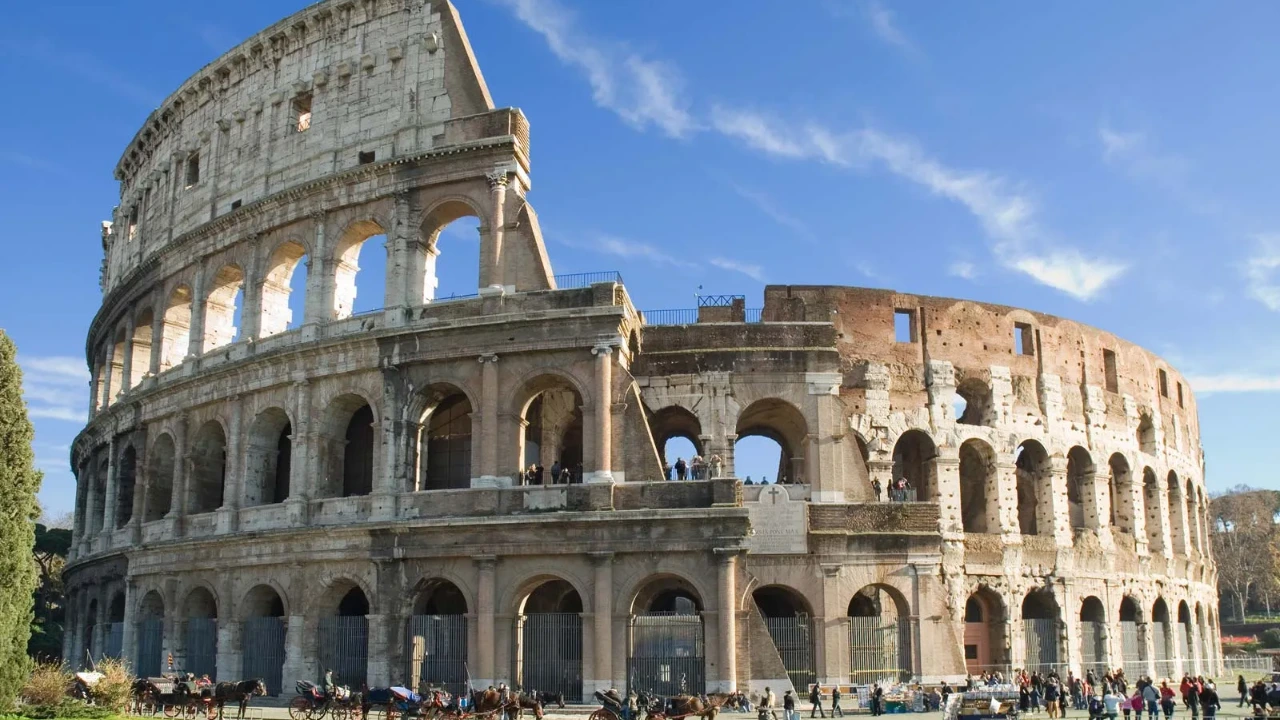
Rome throws a lot at you. Old churches on every corner, fountains you didn’t plan to stop at, more pasta than one trip can justify. And somehow the Colosseum still cuts through all of it. It sits right in the middle of the city, chunks of it broken off, stone worn smooth in places, and that’s part of what makes it work. It’s not a replica. It’s close to 2000 years old and it once packed in tens of thousands of Romans watching gladiator fights, animal hunts, public executions, the whole brutal spectacle. If it’s on your Italy list, and it probably is, here’s what’s actually useful to know before you show up.
What Is the Colosseum?
Basically it’s a massive oval amphitheatre sitting in central Rome. Some people call it the Flavian Amphitheatre. That’s the more “correct” name but almost nobody says it out loud, so don’t worry about that one. The Flavian emperors built it and used it for gladiator combat, staged hunts, executions, even mock naval battles early on, which is a wild thing to picture happening where tourists now line up for selfies. These days it’s one of the most visited sites on earth, and yes, it made the New7Wonders list too, for what that’s worth.
A Short History of the Colosseum
Construction started around AD 70 to 72, under Emperor Vespasian. Part gift to the people after years of civil war, part political statement, since the land had been swallowed up by Nero for his own private palace grounds beforehand. Building something public there instead sent a message.
His son Titus opened it in AD 80. Games ran for 100 days straight, according to the accounts we have. A hundred days. Hard to even picture that now. Domitian, another son, came along later and added the underground rooms below the arena floor.
It stayed in use for a long time after that. Gladiator fights tapered off by around the 5th century. Animal hunts hung on a bit longer. Then two big earthquakes did real damage, one in AD 847, another in 1349, and large sections of the outer wall just came down. After that people took stone from it for other buildings around the city for generations. So what you’re seeing today is only part of the original. Still, it’s massive.
How Was the Colosseum Built?
Travertine limestone on the outside mostly, tuff and brick doing the real structural work inside. Arches everywhere, over and over, because arches spread weight well, and that’s a big part of why the thing could climb four levels high without falling apart.
Quick list of what actually went into it:
- Travertine limestone for the outer facade and main support piers
- Volcanic tuff and brick making up most of the interior structure
- Concrete used in parts of the foundation and vaulting
- Thousands of workers, some skilled, some not, building it in under 10 years
- A canvas awning called the velarium, pulled across parts of the seating to block sun
Under 10 years. No cranes. No trucks. Just sit with that for a second before moving on.
What Does the Colosseum Look Like Inside?
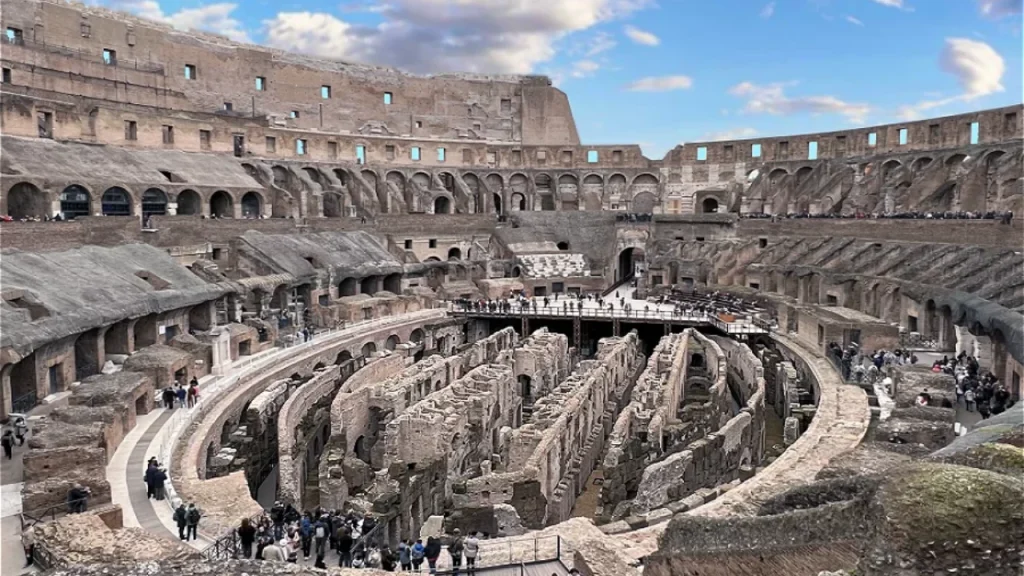
Seeing it from outside, on a postcard or a phone screen, doesn’t prepare you much. Walking in is different. You get the scale of it once you’re actually standing where the seating used to wrap all the way around, four stories of it.
Here’s what tends to stand out once you’re in:
- The arena floor, partly reconstructed now, roughly where the wooden stage sat above the underground rooms
- The hypogeum, that underground maze below, once holding animals, gladiators, equipment, all lifted up through trap doors mid show
- Tiered seating that used to sort people by class, emperor and senators closest to the action, everyone else pushed back further the lower your status
- A handful of surviving marble seats near the lower tiers
- Numbered arched entrances, built so thousands of people could find seats without total chaos
- A small museum area with things dug up on site over the years, coins, tools, inscriptions
Stand at the top and look down into the hypogeum. That’s usually the moment it clicks how much planning a single day of shows there actually took.
How Do You Get Tickets?
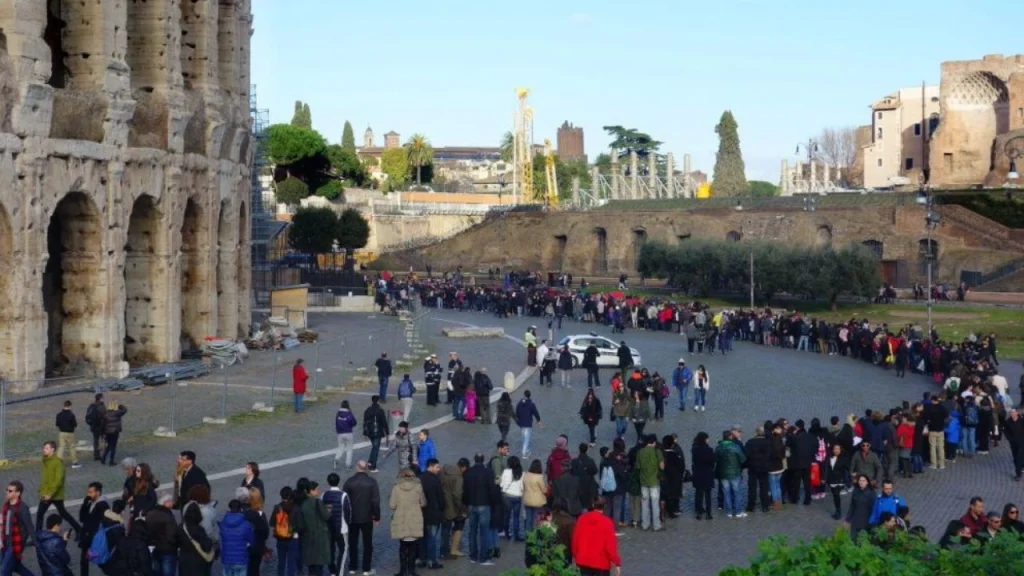
You can buy one at the gate, technically. But the line eats your whole morning sometimes, especially May through September. Booking online first is just the smarter move here.
Worth knowing before you book:
- Standard tickets usually bundle in the Roman Forum and Palatine Hill too, valid across all three within a set window
- Book through the official Colosseum site or an authorized reseller. Not from someone selling tickets outside the gate, no matter how official they look
- EU citizens 18 to 25 often get a discount, under 18 usually gets in free, bring ID regardless
- Arena floor access and the underground hypogeum tour cost extra and need separate booking since they only let small groups in at a time
If either of those extras interests you, book early. They go fast.
When Is the Best Time to Visit?
Right at opening tends to be calmest. Crowds pile up fast once the tour buses start arriving mid morning, and by noon it’s a different place entirely.
Spring and autumn beat summer if you care about mild weather and smaller crowds, which most people do once they’ve stood in an Italian summer line for twenty minutes. July and August get brutal, plus school holidays pack the site even more.
Late afternoon is underrated too. The light does something nice to the stone by then, warm and golden, and a lot of the day tour groups have already left for their buses.
Getting to the Colosseum
Central Rome, so nothing complicated here.
- Metro Line B, get off at Colosseo. Stop’s right outside
- Buses run nearby too, including routes along Via dei Fori Imperiali
- Walkable from a lot of central spots, Monti among them
- Taxis and rideshares usually drop off near the Arch of Constantine, right beside the site
Walking there is probably the better call anyway. You pass other ruins on the way and it starts to click how the ancient city actually fit together, block by block.
Roman Forum and Palatine Hill: Worth Adding to Your Ticket
Since most Colosseum tickets already include these, might as well use them. The Forum was the political and social heart of ancient Rome, full of temple ruins, old government buildings, the bones of old markets. Palatine Hill sits just above, giving you a wide view over the Forum plus the remains of old imperial palaces. All three together takes a few hours, sure, but it fills in a lot more of the picture than the Colosseum alone ever could.
Mistakes People Make at the Colosseum
Small stuff, but it adds up fast if you’re not careful.
- Showing up without a booked ticket in peak season and eating a long line for it
- Forgetting ID, which causes headaches if you’re trying to use a reduced or free ticket
- Not checking the entry time on the ticket. A lot of them are timed slots, not open ended like people assume
- Skipping the Roman Forum and Palatine Hill even though the ticket already covers them
- Wrong shoes. The ground’s uneven stone and gravel in a lot of places, not flat pavement
None of it’s hard to avoid. You just have to know beforehand.
Quick Tips Before You Go
- Book online a few days ahead, more if it’s summer
- Keep your ticket handy, printed or on your phone, plus photo ID
- Show up 15 to 20 minutes early, security checks take a bit
- Bring water. Shade inside is limited, especially midday
- Wear shoes you can actually walk in for hours
- A guided tour helps if you want the history explained instead of just staring at old stone wondering what it meant
- Check the official site before heading over. Hours shift by season and sometimes close early for events
FAQs
How long does it take to visit? Most people spend an hour to 90 minutes inside. Add the Forum and Palatine Hill and you’re looking at three to four hours total, more if you like to take your time.
Can you get in free? EU visitors under 18 usually do, and some countries offer free entry on certain cultural dates through the year. Otherwise you’re buying a ticket like everyone else.
Worth it if history isn’t really your thing? Yeah, honestly. Even without much interest in the history side, the scale of the place and where it sits in Rome make it worth seeing. Plenty of first timers say photos just don’t capture how big it actually is.
Can you walk on the arena floor? Only with a special add-on ticket. Standard entry lets you view it from the surrounding levels, not step onto the reconstructed floor itself.
Closest metro stop? Colosseo, Line B. Drops you right outside, easiest way in without a car.
Related Posts



Stay Informed With the Latest & Most Important News
Previous Post
Next Post



Advertisement