Now Reading: Topical Map, Outline and Article: Inside Dubai’s Busiest Corridor
-
01
Topical Map, Outline and Article: Inside Dubai’s Busiest Corridor

Topical Map, Outline and Article: Inside Dubai’s Busiest Corridor

1. Topical Map
Source Context (why someone searches this): A driver, commuter, new resident or tourist wants to understand Sheikh Zayed Road, Dubai’s main highway, before using it. They may be planning a drive, checking traffic patterns, looking for exits, or trying to avoid getting lost or stuck in a jam.
Central Entity: Sheikh Zayed Road (E11), Dubai’s primary highway corridor.
Central Search Intent: Learn how to drive, navigate, and get around on Sheikh Zayed Road safely and without wasting time, including exits, tolls, traffic timing and nearby landmarks.
Core Section Topics (main explanation and steps):
- What Sheikh Zayed Road is and where it runs
- Why it carries so much traffic
- Step by step guide to driving it
- Main exits and interchanges
- Salik toll gates on the route
- Best and worst times to travel
Outer Section Topics (related settings, shortcuts, other features):
- Landmarks and buildings along the road
- Dubai Metro Red Line running beside it
- Common driver problems and fixes
- Tips for tourists and new drivers
- Alternative routes during heavy traffic
- Future upgrades planned for the corridor
Supporting Entities and Keywords: Sheikh Zayed Road, E11, Dubai Metro Red Line, Salik toll gate, Downtown Dubai, Dubai Marina, Business Bay, Trade Centre roundabout, Jebel Ali, Abu Dhabi highway, RTA Dubai, interchange, exit number, rush hour traffic, gridlock, carpool lane.
2. Article Outline
Title: Inside Dubai’s Busiest Corridor: A Complete Guide to Sheikh Zayed Road
- What Is Sheikh Zayed Road? – Paragraph format. Basic definition, length, official name E11, where it starts and ends.
- Why Is This Road So Busy? – Paragraph plus a short 4 point bullet list of reasons.
- How to Drive Sheikh Zayed Road: Step by Step – Numbered steps, 6 steps.
- Main Exits and Interchanges Drivers Should Know – Bullet list, 7 items, short paragraph intro.
- Best Times to Travel and When to Avoid It – Paragraph format with a short bullet breakdown of peak hours.
- How Salik Tolls Work Along This Route – Paragraph plus 5 point bullet list.
- Landmarks You Will Pass Along the Way – Bullet list, 5 items, each with one line description.
- Metro and Public Transport Running Beside the Road – Paragraph format.
- Common Problems Drivers Face and How to Fix Them – Question based heading, troubleshooting bullet list, 6 items.
- Tips for Tourists and New Drivers – Bullet list, 4 items.
- What Are the Alternative Routes When Traffic Backs Up? – Question based heading, paragraph plus short list.
- What Is Planned Next for This Corridor? – Question based heading, paragraph format.
Inside Dubai’s Busiest Corridor: A Complete Guide to Sheikh Zayed Road
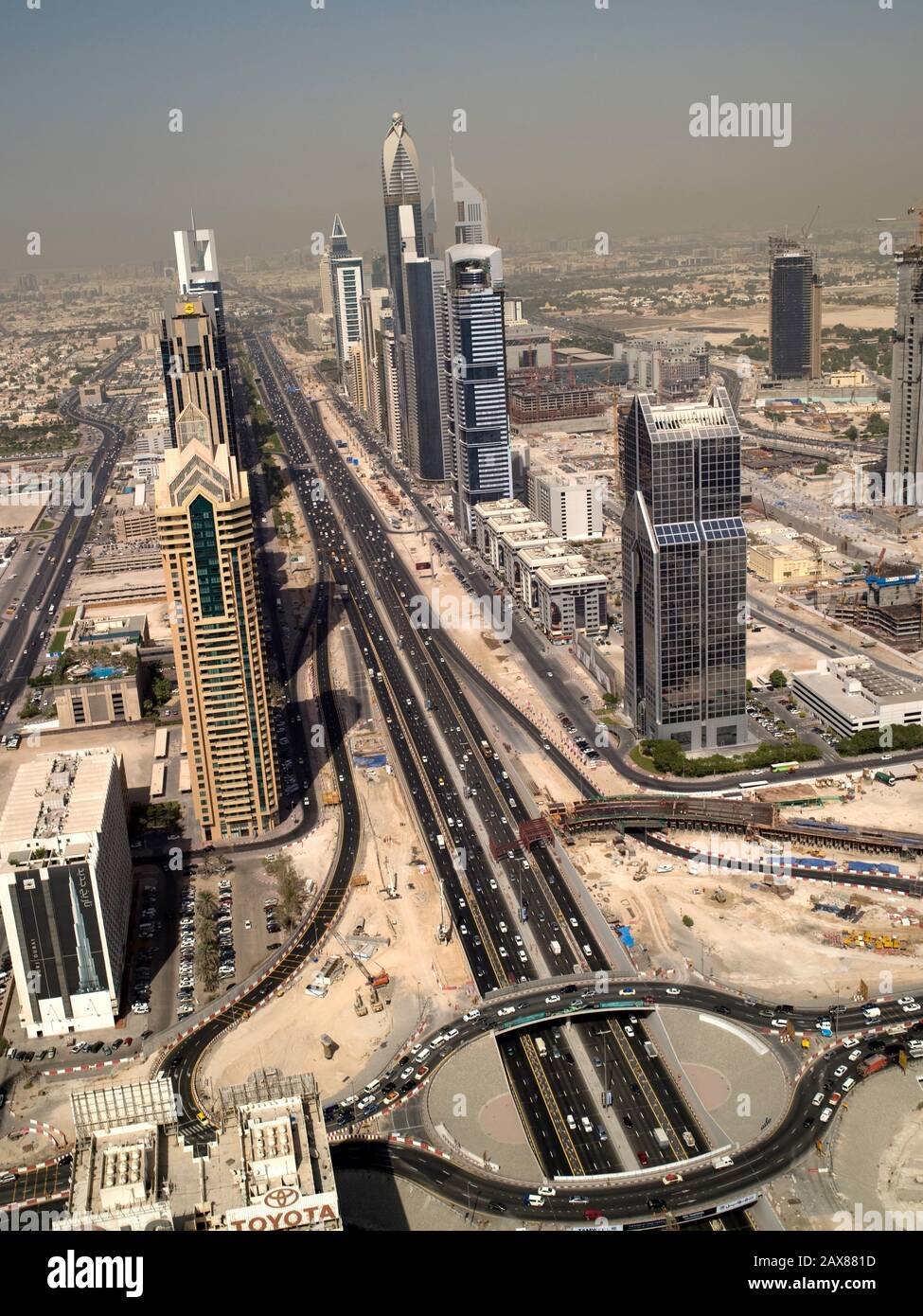
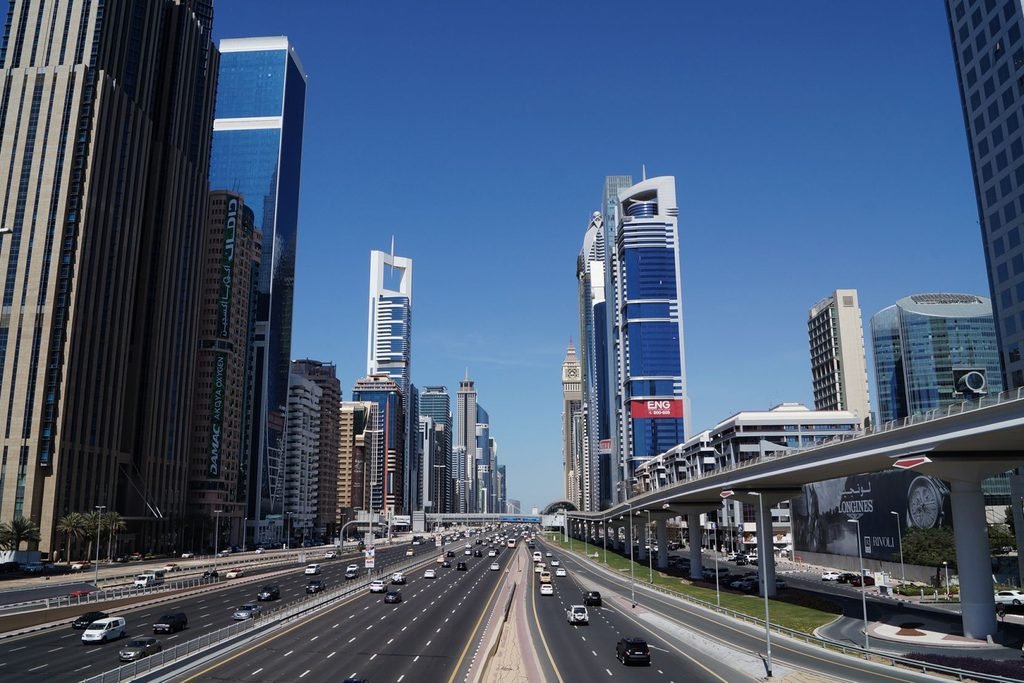
There’s one road in Dubai that basically everyone ends up on sooner or later. Doesn’t matter if you’re heading to a meeting in DIFC or just trying to get to the Marina for dinner, you’ll probably hit it at some point. That’s Sheikh Zayed Road. It moves more cars, buses and trucks in a day than any other stretch of tarmac in the emirate, and yeah, it can look like a lot the first time you see it, six lanes wide with skyscrapers stacked up on both sides like walls. This guide breaks down what the road actually is, how to drive it without losing your mind, and what you’ll pass along the way. Might save you a headache or two.
What Is Sheikh Zayed Road?
Sheikh Zayed Road is the main highway connecting Dubai and Abu Dhabi. Officially it’s E11. It runs way further than just these two cities though, tracing almost the entire west coast of the UAE. But when people say “Sheikh Zayed Road,” they’re almost always talking about the city section. The part that cuts through Downtown Dubai, passes the World Trade Centre, and keeps going toward the Marina and out to Jebel Ali.
Named after Sheikh Zayed bin Sultan Al Nahyan, the founding father of the UAE. It started out decades ago as a fairly plain two lane road, believe it or not. Now it’s this wide, multi lane highway with some of the tallest buildings on the planet lined up on either side. Burj Khalifa sits right off it. So does the Museum of the Future. In a lot of ways this single stretch is the spine the rest of the city just grew around over time.
Why Is This Road So Busy?
Honestly the reason isn’t that complicated. It’s not just a road here, it’s the road. Nearly every major business district, hotel strip and residential area in the city sits either right on it or a short drive from one of its exits. People aren’t just passing through this corridor, they live and work along it, day in and day out.
A few things stack up to keep the numbers this high:
- Downtown Dubai, Business Bay and Dubai Marina all feed directly into this one stretch
- Thousands of office workers commute along it every single weekday, morning and evening
- It’s the only direct route between Dubai and Abu Dhabi if you’re driving your own car
- Buses, taxis and delivery trucks all share the exact same lanes as regular traffic
Put all that together and you get a road that almost never feels empty. Even at midnight there’s usually still something moving on it.
How to Drive Sheikh Zayed Road: Step by Step
First time on this road? Try not to stress too much about it. Looks intimidating from the outside, sure, but it’s actually pretty well signposted once you know what to watch for.
- Check your route before you even leave. Google Maps and Waze both track live traffic here and they’re usually spot on.
- Stick to the middle lanes unless you’re about to exit soon. The far left lane moves fast, and the far right one is mostly exits and slower vehicles.
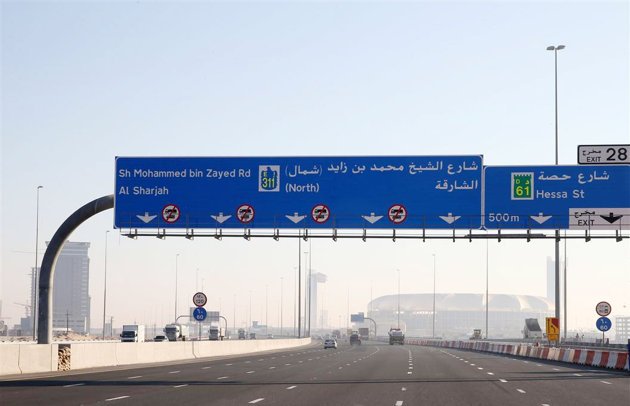
- Watch for the green exit signs. They show up roughly a kilometre before your turn off, listing the exit number and area name.
- Leave a proper gap from the car ahead of you. Traffic can slow down out of nowhere, especially near Trade Centre roundabout and around the Marina stretch.
- Indicate early when you’re switching lanes. People move fast here and don’t always leave much room to work with.
- Missed your exit? Don’t panic, and please don’t slam the brakes either. Just keep going, take the next one, and loop back around.
Speed limit sits at 100 to 120 kilometres per hour along most of it, though that drops near construction zones and the tighter interchanges.
Main Exits and Interchanges Drivers Should Know
There are dozens of exits along this road but honestly only a handful actually matter, since they carry most of the traffic. Knowing these ahead of time saves you a panicked lane change at the last second.
- Exit 36, Trade Centre, leads toward Downtown Dubai and DIFC
- Exit 32, Financial Centre, close to Burj Khalifa and Dubai Mall
- Exit 39, Al Safa, connects out to Jumeirah and the coast
- Exit 45, Interchange 4, the main link to Dubai Marina and JBR
- Exit 48, Interchange 5, handles traffic heading toward Palm Jumeirah
- Exit 66, Jebel Ali, useful if you’re heading toward Abu Dhabi or the free zones
- Exit 13, First Al Khail Road, a shortcut plenty of locals use to skip the busiest central bit
These are marked clearly on the overhead signs. Just glance at your map early and you’ll already know which one is coming up.
Best Times to Travel and When to Avoid It
Timing genuinely makes a difference here. Traffic follows more or less the same pattern every weekday, and once you get a feel for it, working around it isn’t that hard.
Mornings between 7 and 9 get heavy, mostly office traffic pushing toward Downtown and DIFC. Evenings between 5 and 8 tend to be worse still, since everyone leaves work around the same window and the return trip just drags out longer than you’d expect. Midday, roughly 10am to 3pm, moves a lot more freely. Weekends are generally lighter overall, but Thursday and Friday nights can still bunch up near the Marina and Downtown once people head out for dinner or events.
If your schedule has any give in it at all, travelling outside those peak windows can genuinely save you twenty minutes or more on a longer drive. Sometimes more than that if there’s an accident somewhere along the way.
How Salik Tolls Work Along This Route
Dubai runs a toll system called Salik on several major roads, and this one has more than one gate along its length. You don’t stop for these, to be clear. A camera reads your vehicle’s Salik tag as you drive underneath and the charge comes off your linked account on its own.
A few things worth knowing here:
- Each gate charges a flat fee per pass, currently four dirhams
- Charges only apply during set hours, roughly early morning through to midnight
- Rental cars usually come with a Salik tag already fitted, though it’s worth double checking with the rental company
- Topping up can be done online, through the app, or at plenty of supermarkets around town
- Passing a gate with an empty balance gets you fined, so keep it topped up
If you’re only in town for a short trip and planning on taxis or ride hailing apps anyway, this is one less thing you’ll ever need to think about.
Landmarks You Will Pass Along the Way
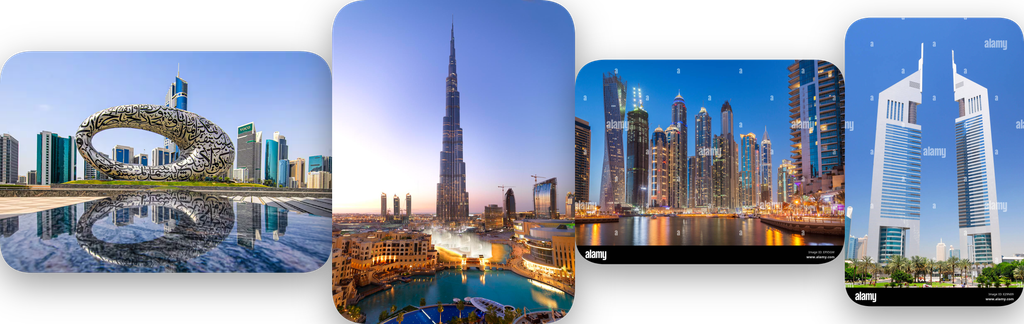
Part of what makes this drive interesting, even after you’ve done it a hundred times, is what’s sitting outside the window. Not many highways anywhere pack in this many recognisable buildings over such a short stretch of road.
- Burj Khalifa, the tallest building in the world, sits just off the road near Downtown
- Museum of the Future, the ring shaped building with Arabic script running across its face
- Dubai World Trade Centre, one of the oldest skyscrapers in the city
- Emirates Towers, the twin towers that have basically become part of the skyline
- Dubai Marina skyline, a dense wall of residential towers further along the route
Worth glancing up once in a while, even if you’re only passing through on your way somewhere else.
Metro and Public Transport Running Beside the Road
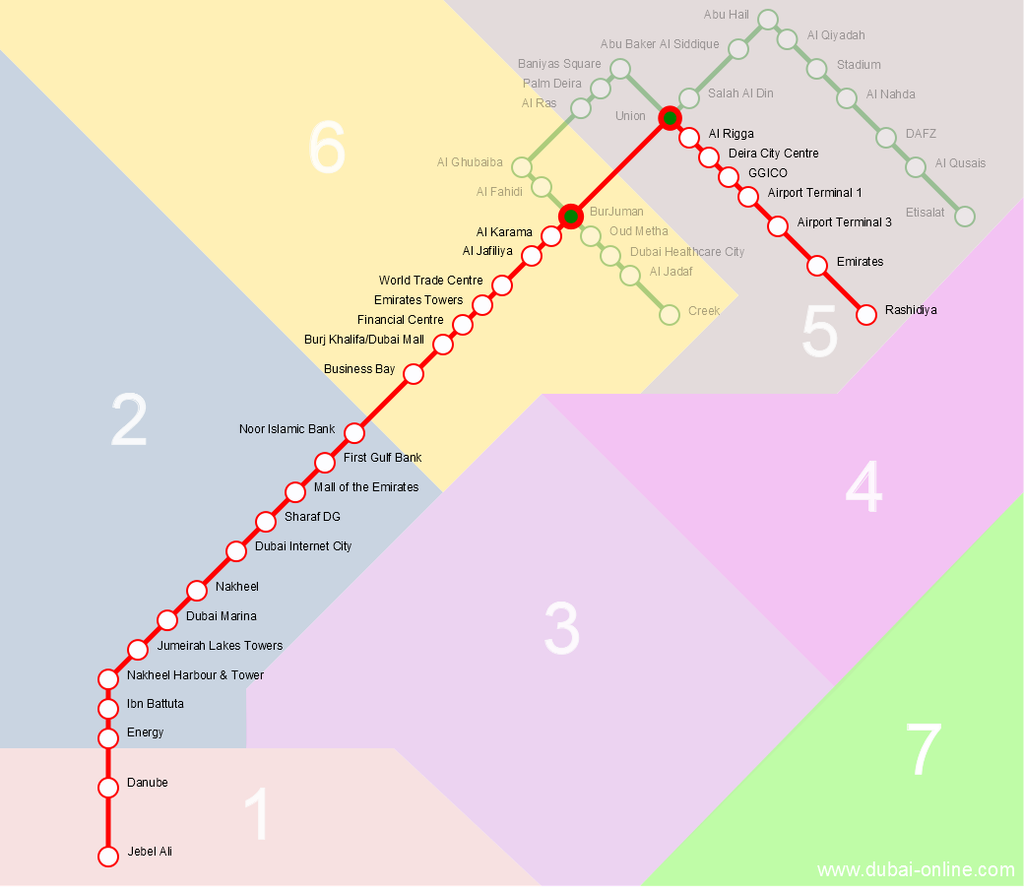
The Dubai Metro Red Line runs almost right alongside Sheikh Zayed Road for most of the way through the city, and that’s really no accident at all. When they planned the metro line, they followed the existing highway corridor, simply because that’s where the people and the businesses already were.
For anyone who’d rather not drive at all, the metro often wins out during peak hours purely because it skips the road traffic completely. Stations sit close to the big landmarks too, Burj Khalifa, Dubai Mall, Trade Centre, the Marina, so a trip that might take thirty minutes by car in traffic can end up taking roughly the same time or even less by train. And you skip the whole parking headache on top of it.
What Problems Do Drivers Commonly Face Here?
Even people who’ve driven this road for years still run into the same handful of issues. Knowing what’s coming at least helps you stay calm instead of getting blindsided.
- Sudden braking near merge points, especially around Trade Centre roundabout
- Confusion over which lane leads where, since a few interchanges split off earlier than you’d expect
- Getting boxed in during lane closures for construction or events
- Sun glare early morning or late afternoon, particularly heading east or west
- Missing an exit and having to loop back, which can easily eat fifteen minutes of your day
- Fast moving left lane traffic, which tends to catch out drivers used to slower highways back home
Most of it honestly just comes down to staying alert and not rushing a lane change at the last possible second.
Tips for Tourists and New Drivers
New to the city, or just visiting for a few days? A few small habits make this road far easier to deal with.
- Rent a car with a working GPS, or mount your phone somewhere you can actually see it while driving
- Try to steer clear of the two rush hour windows if your schedule gives you any room
- Know the exit number for your hotel or destination before you even start the car
- Think about using the metro for anything into the busiest parts of Downtown or the Marina
None of this is complicated stuff. Just takes a bit of prep the first time round, and after that it’s second nature.
What Are the Alternative Routes When Traffic Backs Up?
When Sheikh Zayed Road gets heavy, a few parallel roads can help you dodge the worst of it. Al Khail Road runs a bit further inland and connects a lot of the same areas with generally lighter traffic. Emirates Road, further out still, works well for longer trips that don’t need to touch the busiest central section at all. Local roads through Al Quoz or Al Barsha can work as a detour too, if you already know the area, though expect more traffic lights and slower speeds along them.
Your navigation app usually picks up on heavy congestion on its own and suggests one of these anyway, so it’s often smarter to just let it reroute you rather than sitting in a jam purely out of habit.
What Is Planned Next for This Corridor?
Dubai’s roads authority, the RTA, keeps reviewing and upgrading parts of Sheikh Zayed Road as the city keeps growing around it. Recent years have brought wider lanes, smarter traffic signal timing, and extra interchange capacity in the busiest sections near Downtown and the Marina. Long term planning points toward continued investment in both the road and the metro line running beside it, since the two really do work as a pair to move people through this part of the city.
If you drive or ride through this corridor on a regular basis, it’s worth keeping half an eye on RTA announcements now and then. Lane closures and route tweaks do pop up from time to time as this work keeps going.
Got your own tips for surviving Sheikh Zayed Road traffic? Drop them in the comments below. And if this guide actually helped, pass it along to someone planning a trip out here, they’ll probably thank you for it.
Read More
Dubai mein safar karna aur bhi asaan ho sakta hai agar aapko kuch aur cheezein pata hon. Salik Toll Guide: Complete List of Gates and Charges mein aap Dubai ke tamam Salik gates, unki timings aur charges ki detailed list dekh sakte hain — sirf Sheikh Zayed Road hi nahi, balke poore shehar ke tolls ka pura hisaab. Agar aap driving ki bajaye public transport prefer karte hain, to Dubai Metro Complete Route Guide: Red Line and Green Line Explained aapko har station, interchange point aur timing ke baare mein bataega. Aur agar aap Dubai naye aaye hain aur car rent karne ka soch rahe hain, to How to Rent a Car in Dubai: A Beginner’s Guide mein rental companies, requirements aur tips mil jayenge jo aapka pehla drive stress-free bana denge.
Unlockfly.com
Stay Informed With the Latest & Most Important News
Previous Post
Next Post


Advertisement